
Population
807 644 residents within the city limits (31 December 2024). GUS figures reproduced by Polska w Liczbach.
Source & further reading Polish PridePOLSKA. Z BLISKA.
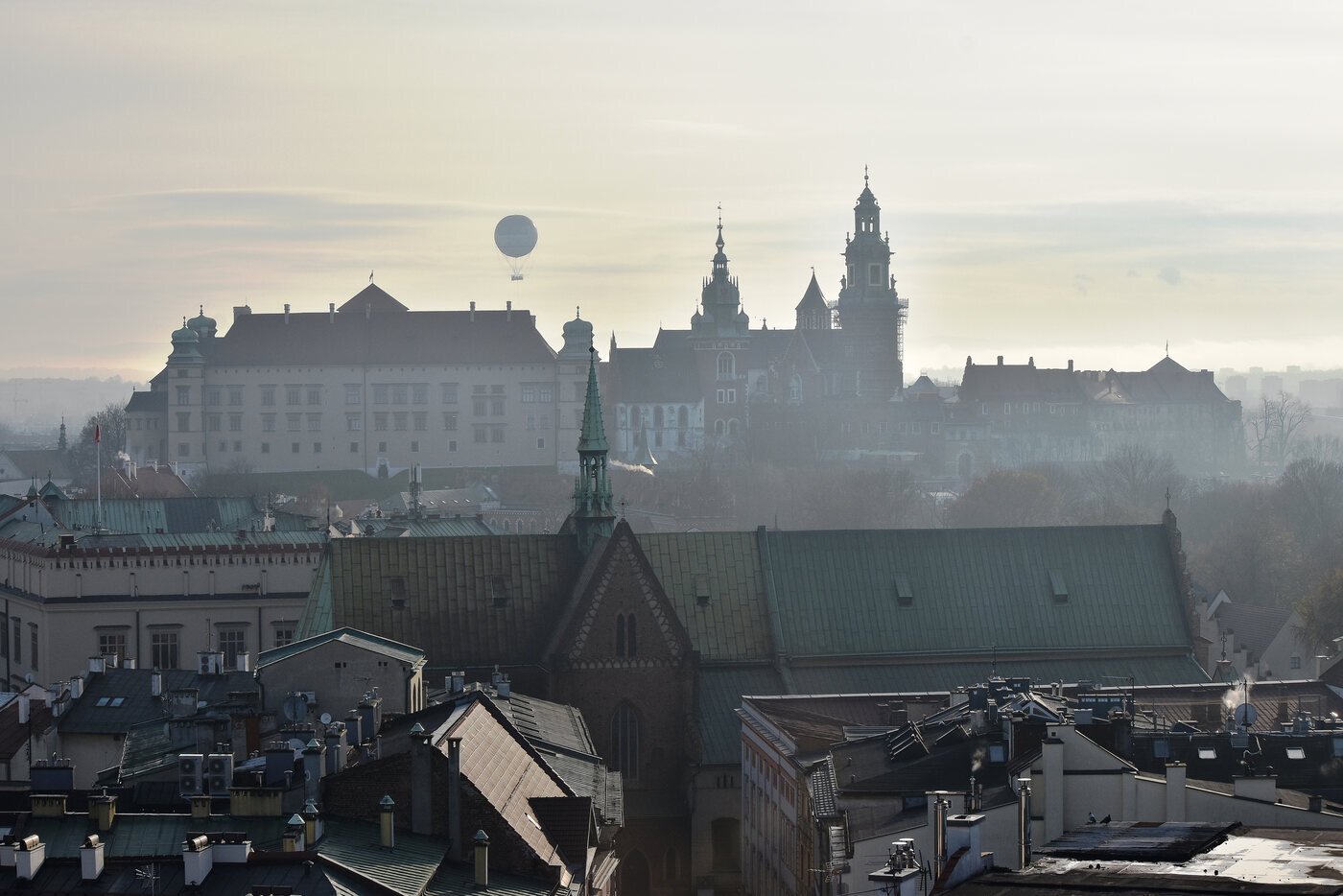
Medieval streets open onto a magnificent market square, while Wawel rises above the Vistula. Cracow wears its history with effortless charm.
More from the official sourceThe historic centre was included in UNESCO’s first World Heritage list in 1978.
Wawel Hill brings together a royal castle and the cathedral where Polish monarchs were crowned.
The Cloth Hall stands at the centre of the Main Market Square, a reminder of the city’s trading past.
807 644 residents within the city limits (31 December 2024). GUS figures reproduced by Polska w Liczbach.
Source & further reading1257: Duke Bolesław the Chaste granted a Magdeburg-law charter. The new layout, following the destruction of the Mongol invasion, shaped the Main Market Square and its street grid.
Source & further readingPod Aniołami, Grodzka 35: traditional Polish cooking in historic cellars, including pierogi and dishes cooked over a wood fire.
Venue / visitor informationSee Wawel Castle and Cathedral, the Main Market Square, St Mary’s Basilica and the historic Kazimierz district.
Source & further readingWisła Kraków — a historic football club founded in 1906. Cracovia is its equally important local rival.
Source & further readingGrodzka: follow this section of the Royal Route from the Main Market Square towards Wawel.
Source & further readingEvery hour a live trumpeter plays the hejnał from St Mary’s tower in four directions. The sudden ending recalls a legend; the medieval arrow story is not established fact.
Source & further readingPopulation figures refer to the stated date and area. Dining entries are suggestions; follow the venue link for current menus and hours. Clubs are selected as recognisable local sporting names.
Every hour, day and night, a trumpeter plays from the taller tower of St Mary’s Basilica towards the four points of the compass. Historically, the signal accompanied the opening and closing of city gates and warned of fire or danger. Polish Radio’s noon broadcast dates back to 1927.
The tune stops abruptly. A legend says an arrow struck a watchman as he warned of a Tatar attack. This is a legend rather than an established historical account; the tradition’s exact beginnings remain uncertain.
Wieliczka, southeast of Cracow, contains underground chambers, salt sculptures and St Kinga’s Chapel. The Tourist Route is guided and includes many stairs. Check tickets and language availability directly with the mine.
Official mine website & tickets ↗In Oświęcim and Brzezinka, west of Cracow, the former German Nazi concentration and extermination camp is preserved as a memorial to victims of the Holocaust and other victims of Nazi persecution. Allow time for reflection and for learning about both Auschwitz I and Auschwitz II-Birkenau.
Reserve entry passes through the Museum’s official booking system. Check current visiting rules and guided tours with a guide-educator.
Official visiting information ↗Official reservations ↗Leonardo da Vinci painted The Last Supper in Milan. In Wieliczka, miner-sculptor Antoni Wyrodek translated its celebrated composition into salt. Compare the central figure of Christ, the apostles’ gestures and the receding room—and see how a painted illusion becomes carved relief.
Leonardo da Vinci · 1495–1498
Digital reproduction: Wikimedia Commons; individual photographer not identified in the source record.
Public domain · Image sourceAntoni Wyrodek · after Leonardo da Vinci
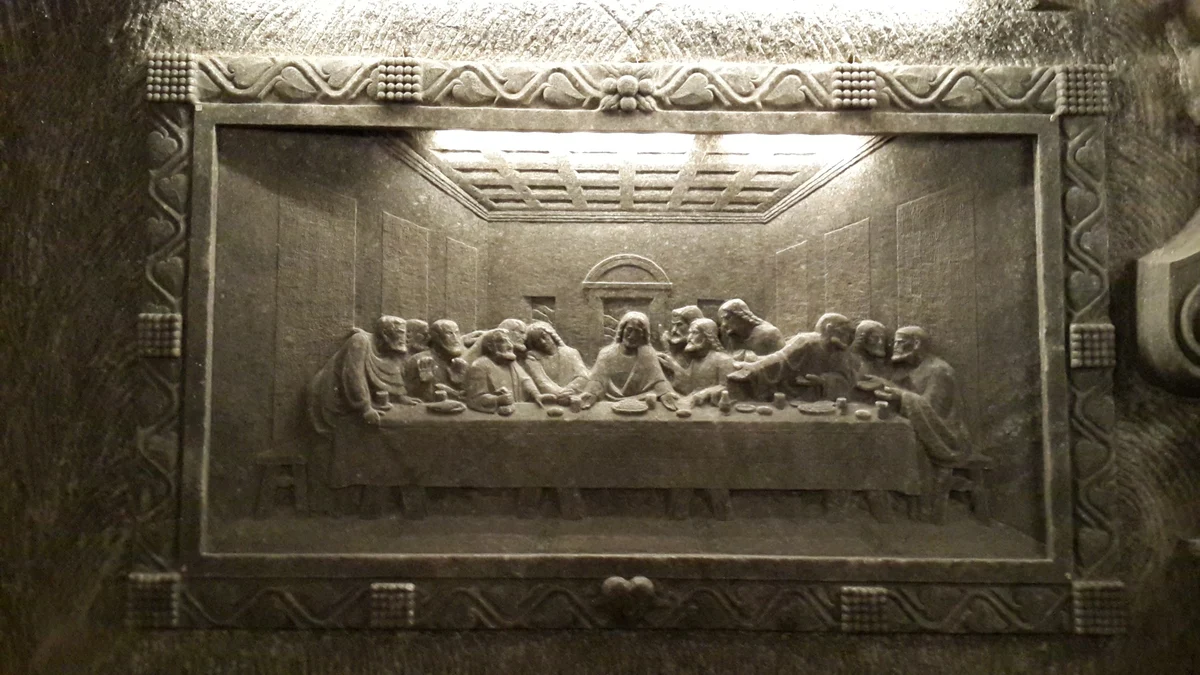
At higher zoom, swipe or scroll inside the photograph to explore the details.
Photograph: Yair Haklai, 2017, via Wikimedia Commons. Preview resized and converted to WebP; full composition retained.
CC BY-SA 4.0 · Image sourceThe long table and the room’s converging lines draw the eye towards Christ. Look at how Wyrodek carries that sense of space into the salt wall.
Leonardo models faces and folds with paint. In the relief, real light catches raised surfaces and casts shadows into carved recesses. The resemblance survives a complete change of material.
Images are shown at comparable widths for study, not at the same physical scale. Click either image for the full-resolution photograph. The salt relief is Wyrodek’s interpretation, not a work by Leonardo.
Scroll to explore. Thumbnails are cropped and resized; click to see the original.
Upload a relevant photograph of Cracow. Vote for the images you love. Each Monday at 00:00 (Europe/Warsaw), the most-voted photograph from the previous week joins the gallery above.
Be the first to share your view of Cracow.